Ecommerce के लिए Astra
Updated 2026-09-05
Product catalog task में Astra की capability को predefined acceptance rules पर जाँचें और demonstration, human review तथा commercial result को अलग रखें।
Context-heavy ecommerce questions पर Astra जाँचें
Astra को उन questions पर इस्तेमाल करें जिनकी कठिनाई context से आती है: ऐसा product term जिसके कई meanings हों, ऐसी description जिसमें qualification बचानी हो या ऐसी brand voice जिसे local language में natural बनाना हो। SKU copy करना और import files format करना deterministic code में रखें।
OpenAI GPT-6 Astra को complex reasoning और professional workflows के लिए document करता है। Practical ecommerce experiment में इस capability को अपनी acceptance rules के विरुद्ध test करें। यह मानने के बजाय कि general model capability catalog accuracy सिद्ध करती है, देखें कि copy acceptable है या नहीं और उसे कितना correction चाहिए।
Fixed sample और acceptance rules पहले तय करें
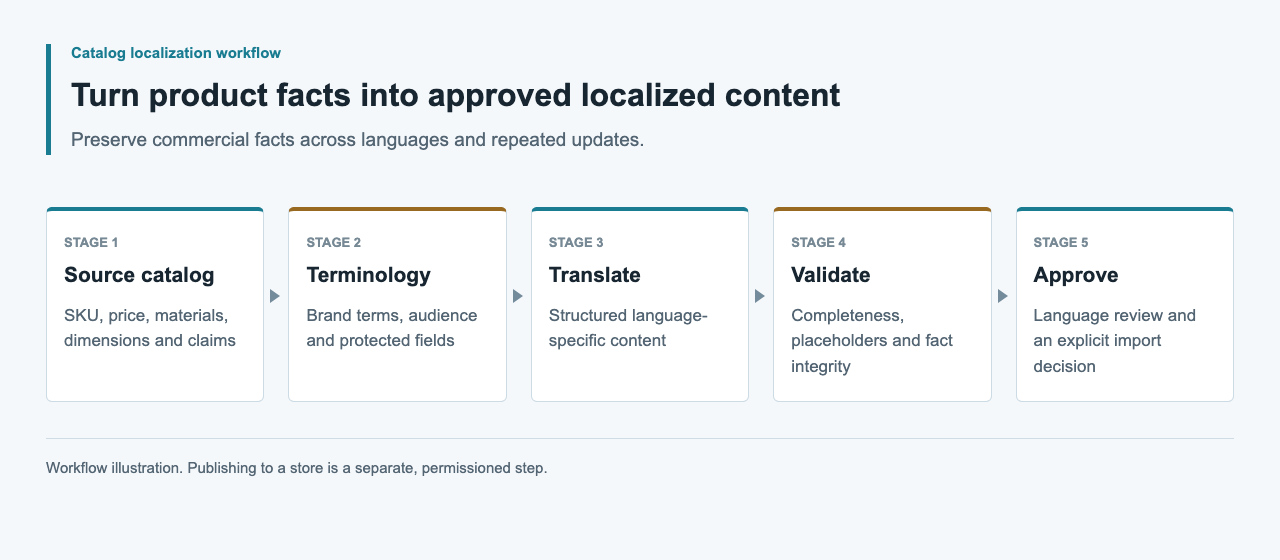
Proposed sample में 20 self-owned या synthetic SKUs, English source और Japanese तथा German target versions हैं। यह test design है, processed catalog नहीं। अलग variant relationships, missing facts, protected brand terms, measurements और कम-से-कम एक ambiguous source statement शामिल करें।
हर candidate के लिए वही source snapshot और glossary रखें। Output देखने से पहले तय करें कि कौन-से fields required हैं और acceptable description किसे कहेंगे। Source rights record करें और real customer data experiment से बाहर रखें। Sample errors सामने लाने के लिए है, हर product category या market का प्रतिनिधित्व करने के लिए नहीं।
Draft में केवल localized text और issue list माँगें
Localized text और अलग issue list माँगें। SKU, price, currency, units और variant identity में बदलाव रोकें। Unsupported claims draft से बाहर रखें और specification missing हो तो review issue अनिवार्य करें। Source references रखें, ताकि reviewer model के confidence के बजाय product जाँच सके।
नीचे का template illustrative task contract है। इसे भविष्य के controlled run की तैयारी में उपयोग किया जा सकता है, लेकिन model settings और actual access अलग record हों। Human follow-up instructions को experiment history में रखें; उन्हें initial request में अदृश्य रूप से न मिला दें।
Inputs: fixed source catalog, glossary revision, locale brief.
For each product-locale pair, propose title and description.
Use only supported facts; retain qualifications and care warnings.
Return review issues separately from public copy.
Do not edit SKU, price, currency, measurement units or variant IDs.
Do not write to a store or publish any page.
Keep every candidate associated with its source revision.
Drafter, reviewer और revision assistant को अलग arms में जाँचें
यदि access अनुमति दे तो Astra को drafter और reviewer के रूप में अलग experimental arms में evaluate करें। Source, glossary और acceptance rules constant रखें। Stronger review step तभी useful है जब वह relevant defects पकड़े और नए unsupported changes न बनाए।
Comparison model के लिए exact available ID record करें और वही sample उपयोग करें। जहाँ practical हो editorial reviewers से model identity छिपाएँ। Accepted product-locale revisions और correction categories गिनें, फिर difficult cases individually inspect करें। एक attractive paragraph या response length से winner घोषित न करें।
| जाँची जा रही भूमिका | नियंत्रित input | देखा जा सकने वाला result |
|---|---|---|
| description का drafter | approved source और glossary | पहले pass के defects और accepted revision |
| translation का reviewer | fixed candidate और source facts | useful findings और incorrect objections |
| revision का assistant | दर्ज reviewer instructions | corrections और नए defects |
Deterministic checks के बाद editorial review करें
Protected fields और source revisions की exact तुलना करें। Required output fields, identifier coverage, placeholder counts और parsable markup जाँचें। Schema-valid result को editorial review में भेजें, सीधे import में नहीं।
Product और language reviewers claims, omissions, terminology और natural expression assess करें। हर correction को original candidate और accepted version के साथ record करें। Unresolved facts को held work मानें। Reviewer copy manually rewrite करे तो intervention बचाएँ, ताकि result को untouched model output की तरह प्रस्तुत न किया जाए।
Approved candidates को destination import में verify करें
Import proposal source-current और approved candidates से बनाएँ। Test WordPress/WooCommerce environment में target languages map करने से पहले उसका actual multilingual storage contract confirm करें। Source export और previous field values comparison के लिए उपलब्ध रखें।
Authorized test import के बाद import report save करें और stored text, SKU, price तथा units को approved package से compare करें। Storefront locale और variants inspect करें। Environment label के साथ real test screenshots रखें। Generated CSV, model answer और stored multilingual catalog अलग deliverables हैं; experiment को बताना चाहिए कि इनमें से कौन-से हासिल हुए।
Accepted revision की पूरी cost record करें
Model identity, access path, request attempts, input और output usage, available cache details, request charges और manual revision time record करें। Failed या interrupted requests का usage ज्ञात हो तो उन्हें भी रखें। Unknown usage को reason के साथ empty रखें, zero न बनाएँ।
API spend को accepted product-locale revision पर तभी report करें जब ledger पर्याप्त complete हो और कम-से-कम एक revision accepted हो। Subscription-based work को API charges से अलग रखें और actual provider identify करें। केवल first generation की cost नहीं, full task cost की तुलना editorial burden से करें।
Case evidence की अनुपस्थिति को स्पष्ट रखें
GPT-6 Astra officially exists। September 5, 2026 के public APIsRouter catalog snapshot में यह listed नहीं था और यह article gateway Astra access स्थापित नहीं करता। Future run में actual authorized access path और model identity record करनी होगी; official OpenAI product से किया गया work उसी product को attribute करें।
यह case evidence-blocked है: 20-SKU run, multilingual outputs, reviewer decisions, usage ledger और verified store import उपलब्ध नहीं हैं। Report करने के लिए case results नहीं हैं। Completed case publish करने से पहले ये artifacts, failed checks और human interventions चाहिए, फिर source और editorial review होना चाहिए।
अक्सर पूछे जाने वाले प्रश्न
Catalog workflow में Astra को क्या करना चाहिए?
Context-heavy drafting या review जाँचें, जैसे ambiguous terminology और qualified claims। Identity preservation और import assembly deterministic steps में रखें।
Fixed sample क्यों उपयोग करें?
Fixed sample से tested configuration के differences को समझना आसान होता है। Difficult records शामिल करें और हर candidate पर same acceptance criteria लगाएँ।
Manual corrections कैसे गिनें?
Initial candidate, reviewer instructions और accepted revision बचाएँ। Corrections classify करें और measured होने पर time record करें, ताकि human work result में visible रहे।
Comparison को एक model के पक्ष में झुकने से कैसे रोकें?
Source, glossary और tasks constant रखें तथा जहाँ practical हो editorial reviewers से model identity छिपाएँ। Same rubric में accepted work और defects compare करें।
Current case status क्या है?
Experiment defined है लेकिन evidence-blocked है। Completed case मानने से पहले evidence section में दिए missing run और access records प्राप्त करें।