Product catalog localization workflow
Updated 2026-09-05
Text patches generate کریں، product facts code میں محفوظ رکھیں، پھر meaning review کریں۔ Local 20-product case دکھاتا ہے کہ 40 structurally valid drafts کو پھر بھی correction چاہیے ہو سکتی ہے۔
Translate کرنے سے پہلے source freeze کریں
Catalog export کریں اور immutable source snapshot محفوظ رکھیں۔ Origin، export time اور revision یا file hash record کریں۔ ہر variant کو stable identity دیں اور language jobs بنانے سے پہلے missing یا duplicate identifiers check کریں۔ Intended product-locale pairs کا manifest رکھیں۔
Source preparation کو translation سے الگ رکھیں۔ Contradictory measurements، missing units اور unsupported claims کو پہلے product owner کے ساتھ resolve کریں۔ Supplier export normalize کرنا پڑے تو corrections کو source changes کے طور پر record کریں اور language work سے پہلے owner سے baseline approve کرائیں۔
Protected facts کو editable text سے الگ کریں
SKU، price، currency، unit، variant relationship اور دوسرے operational values کا protected record بنائیں۔ صرف text patch generate کریں۔ Assembly کے وقت protected values source سے direct copy کر کے دوبارہ compare کریں، تاکہ model context میں دیکھے گئے field کی authority نہ بنے۔
Claims کو بھی traceable رکھیں۔ Approved assertions کو evidence سے link کریں اور unsupported بات flag کرنے کو کہیں۔ نیچے والی configuration illustrative pipeline policy ہے، Shopify یا WooCommerce کی accepted file نہیں۔ Adapter کو actual destination contract سے map کرنا ہوگا۔
{
  "identity": ["product_id", "variant_id", "locale"],
  "protected": ["sku", "price_minor", "currency", "unit", "parent_id"],
  "editable": ["title", "description", "care_text"],
  "revisionInputs": ["source", "glossary", "prompt"],
  "releaseRequires": ["field_checks", "fact_review", "language_review"],
  "destinationWrite": "separate_authorization"
}
Glossary اور locale brief attach کریں
Locale brief میں audience، tone، approved terminology اور presentation rules لکھیں۔ Product concepts کو preferred spellings سے الگ رکھیں۔ W3C ITS terminology اور translation metadata کے لیے richer system کو inform کر سکتی ہے؛ یہ workflow simpler versioned editorial record استعمال کرتی ہے۔
Actual category کی examples سے ambiguous terms resolve کریں۔ Glossary entry بدلے تو affected candidates identify کریں اور regeneration یا targeted edit کا فیصلہ کریں۔ ہر locale اسی approved source سے جڑی ہو۔ ایک translated version کو باقی locales کے لیے unreviewed intermediate source نہ بننے دیں۔
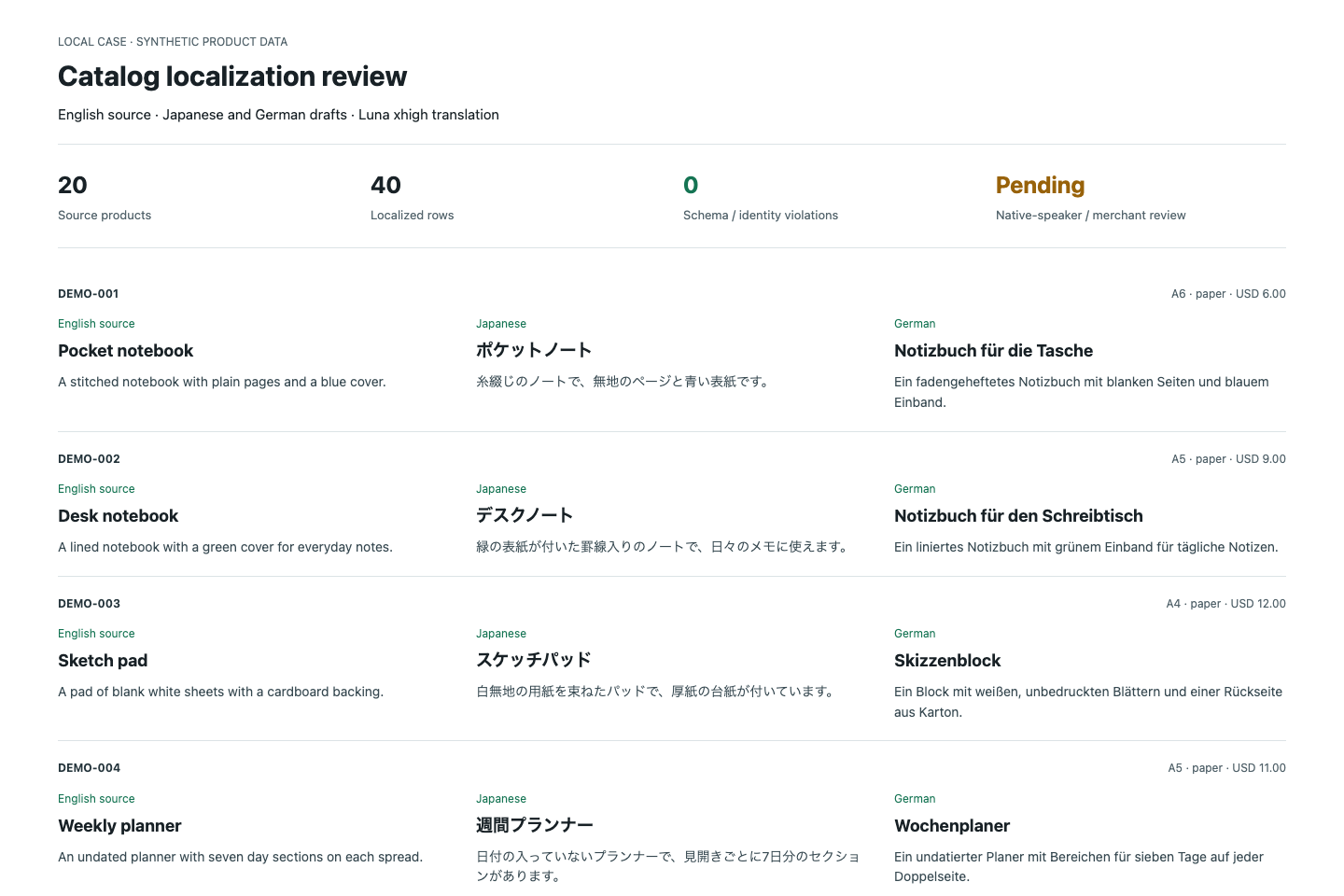
Local case: 20 products، 40 language patches
20 synthetic products کے frozen catalog سے translation agent نے gpt-5.6-luna اور xhigh reasoning کے ساتھ 20 Japanese اور 20 German patches بنائے۔ ہر patch میں صرف sku، locale، title اور description ہیں۔ Assembler price، currency، material اور dimensions source.json سے copy کرتا ہے؛ facts preserve کرنا pipeline property ہے، model کو delegated copying task نہیں۔
Saved validated-ja.json اور validated-de.json میں 20 rows اور empty failures list ہے۔ Read-only reassembly دونوں saved outputs سے match کرتی ہے۔ اپنے batch میں source revision رکھیں، language patches الگ save کریں اور review package بنانے سے پہلے coverage اور permitted fields validate کریں۔
| Case artifact | Recorded result | Review state |
|---|---|---|
| source.json | 20 synthetic products؛ frozen revision | Authoritative fixture facts |
| validated-ja.json | 20 assembled rows؛ 0 structural failures | Semantic review pending |
| validated-de.json | 20 assembled rows؛ 0 structural failures | Semantic review pending |
| raw-ja.json | Original Japanese patches محفوظ | دو AI-review corrections سے پہلے |
Editorial review سے پہلے deterministic checks چلائیں
Output schema، allowed fields، identifier mapping، source revision، required text اور protected values validate کریں۔ Application کی real template grammar سے placeholder counts compare کریں۔ Markup کو general text substitution کے بجائے parser سے HTML parse کریں۔ Malformed records hold کریں، importer سے repair نہ کرائیں۔
Spreadsheet review files میں OWASP formula-injection risks اور universal safe CSV transformation نہ ہونے کی بات document کرتا ہے۔ Chosen spreadsheet tool کے لیے reviewed export policy استعمال کریں اور artifact کو machine import سے الگ رکھیں۔ Human viewing کے لیے escape prefix SKU یا public payload نہ بدل دے۔
Review decisions کو content revisions سے bind کریں
Reviewer کو source facts، glossary context، candidate اور structured issues دیں۔ Factual اور language decisions الگ لیں۔ کس نے approve کیا اور کون سی revisions دیکھی، record کریں۔ Reviewer localized phrase accept مگر evidence مانگنے والا claim hold کر سکتا ہے؛ record یہ فرق ظاہر کرے۔
Local case میں AI review نے Japanese DEMO-003 کو corrugated cardboard imply کرنے والی wording سے source کے cardboard backing کے مطابق wording میں بدلا، اور DEMO-010 میں total two handles واضح کیے۔ Original output raw-ja.json میں ہے۔ دونوں assembled languages اب بھی review_status: unreviewed اور translation_semantic_review: pending رکھتی ہیں؛ یہ native-speaker یا merchant approval نہیں۔
| Artifact | Purpose | Must identify |
|---|---|---|
| Source snapshot | Authoritative input | Product اور source revision |
| Candidate record | Proposed localized text | Locale، attempt اور glossary |
| Review decision | اس candidate کے استعمال کی permission | Reviewer اور content revision |
| Import package | Minimal approved destination patch | Adapter اور target fields |
| Read-back report | Observed stored outcome | Destination IDs اور differences |
Destination package assemble اور verify کریں
Approved، source-current candidates منتخب کریں اور صرف permitted fields transform کریں۔ Shopify translation API resource اور digest contract استعمال کرتی ہے؛ WooCommerce deployment کو product mapping اور multiple languages کے لیے verified localization layer چاہیے۔ Generic review package خود universal store import نہیں۔
Staging میں چھوٹا authorized import test کریں۔ Importer result save کریں، targeted fields read back کریں اور product اور locale behavior inspect کریں۔ Planned product set کو stored outcomes سے reconcile کریں۔ Failed rows الگ رکھیں اور ضرورت پر scoped reversal کے لیے previous values محفوظ کریں۔
Result اور اس کی limits record کریں
Completed manifest source، glossary، prompts، candidates، checks، approvals اور destination results کو link کرے۔ Evidence available ہو تو retries سمیت ہر attempt کا actual usage record کریں۔ Missing usage اور review results explicitly unknown رکھیں۔ Parse ہونے والی file shop کے قبول کرنے کا proof نہیں۔
Bounded local case میں selected model Luna تھا، Astra نہیں، اور gateway call یا real store import نہیں ہوا۔ API usage، request IDs اور billing exposed نہیں تھے؛ model_api_usage اور model_api_cost null ہیں، zero نہیں۔ اگلا قدم semantic approval اور separately authorized destination test ہے۔
عمومی سوالات
Smallest useful pipeline artifact کیا ہے؟
ایک product-locale pair کے لیے candidate، validation result اور review decision سے linked source snapshot۔ بعد میں یہی record verified destination patch میں map ہو سکتا ہے۔
کیا source prices model کے ذریعے بھیجنی چاہییں؟
صرف ضرورت کا context دیں۔ Authoritative prices editable output سے باہر رکھیں اور record assemble کرتے وقت source سے direct copy کریں۔
Duplicate translations سے کیسے بچوں؟
Source، glossary اور prompt revisions والی stable product-locale identity استعمال کریں۔ Retries intended work کے attempts رہیں، unrelated new records نہ بنیں۔
کیا ایک CSV reviewers اور importer دونوں کے لیے ہو سکتی ہے؟
Separate artifacts بہتر ہیں۔ Review notes اور spreadsheet safety transformations public fields یا machine imports کے لیے نامناسب ہو سکتی ہیں۔
کیا field validation pass ہونا translation quality ثابت کرتا ہے؟
نہیں۔ Local case میں 40 assembled rows نے structural checks pass کیے، پھر بھی AI review نے Japanese wording درست کی۔ Source-copied fields intact رہیں مگر description meaning کو review درکار تھا۔