E-commerce localization จาก catalog ถึง storefront
Updated 2026-09-05
แยกภาษา product facts และ market operations เป็น decisions คนละแบบ สร้าง glossary รีวิวแต่ละ locale และตรวจ content ที่เก็บในบริบท storefront
แยก translation จาก market readiness
Translation เปลี่ยนวิธีแสดง fact Localization ยังถามว่าผู้อ่านเข้าใจสินค้า ตีความ measurements และหาข้อมูล service ที่เกี่ยวข้องได้หรือไม่ Market readiness ไปไกลกว่านั้น ต้องมีคนยืนยัน delivery, payment, return และ product rules จริง หน้าที่ลื่นไหลไม่สามารถยืนยัน operational facts เหล่านี้
ทำ scope sheet สำหรับแต่ละ locale ระบุ language reviewer, category reviewer และ store owner บันทึก policies ที่ยังไม่แก้และมอบหมาย action ถัดไป เริ่มจาก buyer journey ที่ทีมรองรับ end to end แล้วขยาย language inventory ตาม review capacity
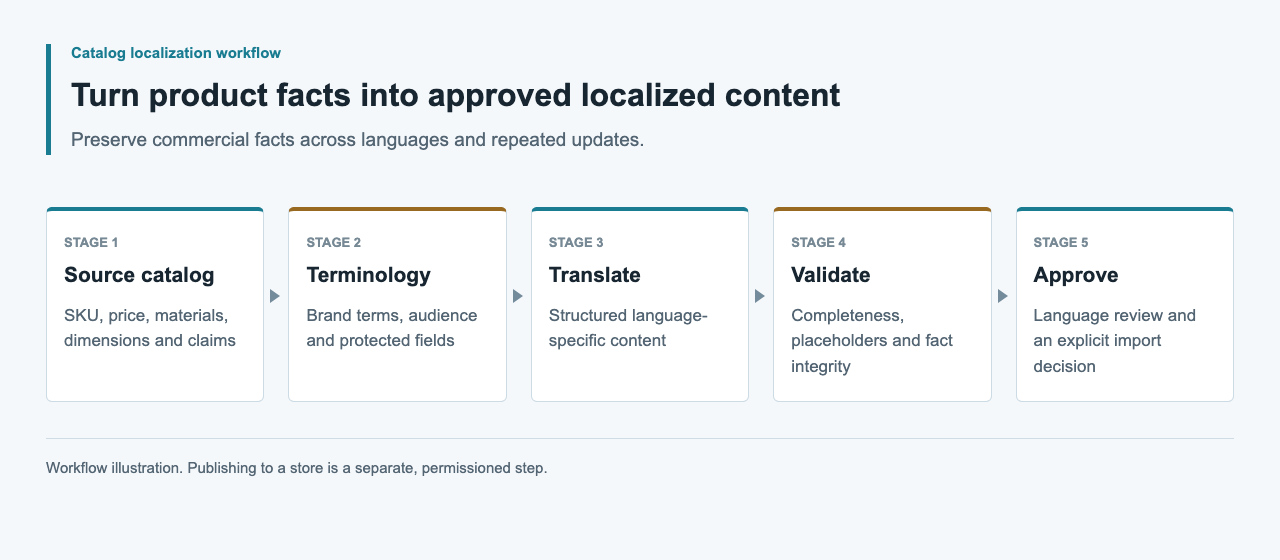
ทำ inventory ของ buyer journey
เริ่มจากทางที่ buyer เดิน: product discovery, variant selection, อ่าน specification, cart review และ service information รวม navigation labels, size guidance, image text และ error messages เมื่อมีผลต่อเส้นทางนั้น แปล descriptions อย่างเดียวอาจทิ้งการตัดสินใจสำคัญไว้ในภาษาอื่น
มอบหมาย content surface ให้ owner และ storage location จริง theme label, product field และ policy document อาจใช้ tools ต่างกัน เชื่อม inventory กับ source revisions เพื่อให้ product update ภายหลังระบุ translation ที่ต้อง review ได้ แทนให้ทีมค้นประโยคที่พึ่งพาทั้งหมดใหม่
| Surface | คำถามหลักของ reviewer | หลักฐานที่ต้องเก็บ |
|---|---|---|
| Product text | Facts ครบและเข้าใจได้หรือไม่? | Approved revision ที่ผูกกับ source |
| Variant selectors | Buyer เลือก item ที่ตั้งใจได้หรือไม่? | Label และ variant mapping |
| Campaign copy | Approved message เหมาะที่นี่หรือไม่? | Market brief และ approval |
| Service policies | Wording ตรง operations จริงหรือไม่? | Policy-owner approval ของ policy |
| Store interface | Locale render ได้สอดคล้องหรือไม่? | Viewport และ navigation checks |
กำหนด locale identifiers อย่างตั้งใจ
W3C guidance อธิบายว่า BCP 47 tags แยกภาษา และเมื่อจำเป็นก็แยก script หรือ region ใช้ language tag ที่ตรงกับ content และค่าที่ destination platform รองรับ อย่าสร้าง locale code เพราะดูเหมือน country abbreviation
ใน records ของคุณ แยก content locale จาก target market และ currency ภาษาเดียวกันใช้หลายตลาดที่มี commercial settings ต่างกันได้ ทำ fallback behavior ให้ชัด translation ที่หายต้องบอกได้ระหว่าง review ไม่ใช่นับเป็น locale เสร็จเพราะ source language แสดงแทนอย่างเงียบๆ
สร้าง glossary รอบความหมายของสินค้า
สำหรับ term สำคัญแต่ละตัว เขียน definition สั้นและ product context ที่ใช้ เพิ่ม approved target forms, brand names ที่ไม่เปลี่ยน และตัวอย่าง misleading alternatives ให้ reviewer ขอ exception ได้ แทนบังคับ glossary term ที่ผิดทางเทคนิคในทุกประโยค
version glossary และแนบ version กับ candidate ทุกตัว term ที่เปลี่ยนควร trigger review ของ content ที่ได้รับผล W3C ITS เป็น reference สำหรับ marking terminology และ translation-related metadata record แบบเบาด้านล่างเป็น editorial format ตัวอย่าง ไม่ใช่ ITS implementation หรือ store import schema
{
  "conceptId": "material-linen",
  "definition": "Fiber described as linen in the approved specification",
  "sourceTerm": "linen",
  "targetLocale": "de",
  "approvedTerm": "Leinen",
  "rule": "Do not infer a material blend or certification",
  "reviewStatus": "pending"
}
ปกป้องราคา หน่วย และ product claims
decimal separator แบบ locale เป็น display choice ไม่ใช่ permission เปลี่ยน stored amount เก็บ source price, currency และ unit values ใน protected record หากต้อง conversion ให้ทำเป็น deterministic operation ที่ approve แยกและบันทึก conversion rule
ใช้วินัยเดียวกันกับ claims วลีอย่าง suitable for travel ต้องไม่กลายเป็น durability guarantee ที่ไม่มีหลักฐาน ขอ evidence สำหรับ materials, compatibility, certifications และ health-related assertions รักษาความไม่แน่นอนจาก source และ flag missing specifications ให้ product owner แทนให้โมเดลเติมเรื่องที่ฟังดูดี
รีวิวแต่ละ locale สองรอบ
ใช้ fact pass และ language pass รอบแรกเทียบ quantities, units, product relationships และ claims กับ source รอบสองดู terminology, natural expression, audience และ brand tone บันทึกผลแยกเพื่อไม่ให้ copy ที่อ่านง่ายซ่อน factual defect
รีวิว product context ทั้งหมด รวม warnings และ variant labels ไม่ใช่เฉพาะ isolated strings สำหรับ category ที่ไม่คุ้นหรือมี regulation ให้ specialist ที่เหมาะสมช่วย back-translation จากโมเดลช่วยหาความต่างได้ แต่ generated texts ที่ตรงกันไม่ใช่ independent proof ว่าข้อใดตรง product
เตรียม destination-specific delivery
Shopify แยก translation management จากการนำเสนอ localized store content ที่กว้างกว่าใน merchant docs ใช้ language workflow ของ platform และตรวจ resources ที่รองรับ store stack อื่นต้องยืนยัน multilingual layer และ import contract ก่อน map locale columns
สร้าง delivery package ที่มี product identifiers, locale, source revision, approved text และ reviewer identity แยก review package จาก minimal import payload ใน staging store ตรวจ language selection, fallback, text wrapping, links และ product selection content ที่อยู่ใน export ไม่จำเป็นต้องมองเห็นใน page ที่ตั้งใจ
รักษา localization ให้ปัจจุบันหลัง launch
ติดตาม source changes ระดับ field material statement ที่แก้ควร invalidate affected translations แม้ title เดิม glossary ที่อัปเดตอาจต้อง targeted terminology review price change ควรผ่าน commercial data path ไม่ใช่ rewrite ทุก description
วัด coverage เป็น current, approved product-locale revisions และรายงาน held หรือ stale records แยก ติดตาม API spend, reviewer effort และ storefront behavior แยกกัน ใช้ catalog workflow กำหนด records แล้ว review backlog ตาม product importance และ source freshness ก่อนขยาย coverage
คำถามที่พบบ่อย
Localization เหมือน translation หรือไม่?
Translation เป็นองค์ประกอบหนึ่ง Localization ยังตรวจ context และ presentation ส่วน commercial readiness ต้องยืนยัน store operations และ product rules จริง
Locale ต้องมี country code เสมอหรือไม่?
ใช้ specificity ที่ content ต้องการและ platform รองรับ แยก market targeting เพื่อไม่ให้ language tag กลายเป็น proxy ของ currency หรือ shipping eligibility โดยไม่ตั้งใจ
AI แปลง dimensions ระหว่าง translation ได้หรือไม่?
เก็บ conversion นอก language step เมื่อได้รับอนุญาตให้ใช้ recorded conversion rule และตรวจทั้ง number กับ unit ก่อน approval
ควรจัดการ brand names อย่างไร?
บันทึก approved treatment ใน glossary workflow นี้คงชื่อเป็นค่าเริ่มต้น และให้ brand owner approve การแสดงผลเฉพาะตลาด
Locale พร้อม publish เมื่อใด?
เมื่อ source-current content ผ่าน factual และ language review, destination import ถูก verify และ storefront checks ยืนยัน content กับ product behavior ที่ตั้งใจ