Traceable evidence के साथ AI stock analysis
Updated 2026-09-06
किसी विशिष्ट company question को reviewable research packet में बदलें। Source identity सुरक्षित रखें, metrics की स्पष्ट गणना करें और interpretation को reported facts से अलग रखें।
ऐसा सवाल पूछें जिसे evidence से हल किया जा सके
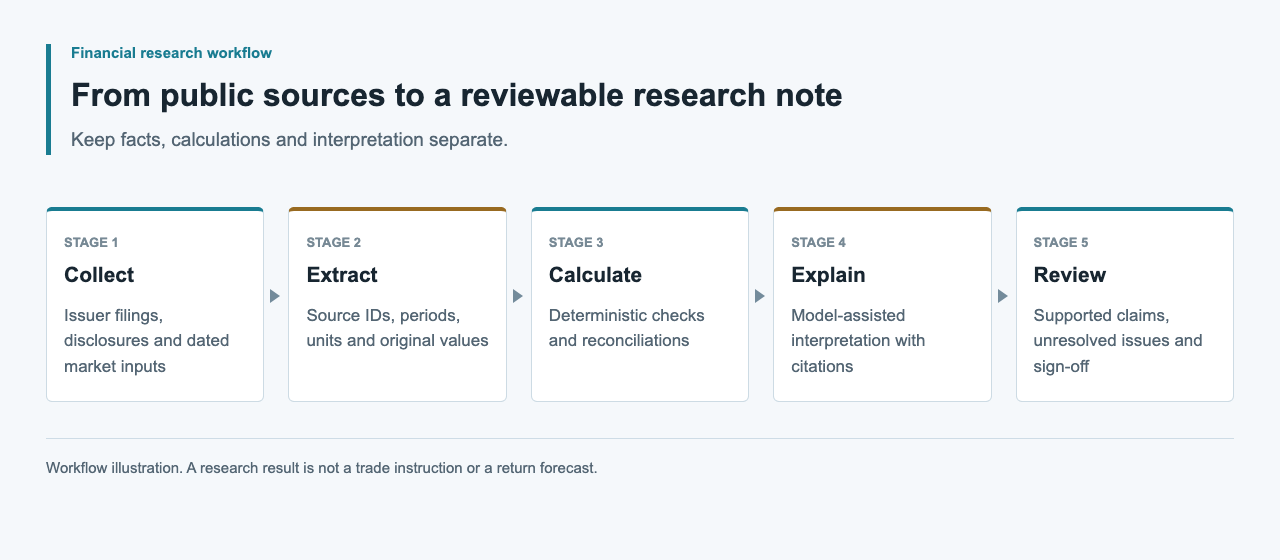
ऐसे सवाल से शुरुआत करें जैसे reported margin changes क्या company के disclosed operating drivers के अनुरूप हैं। Issuer और information cutoff तय करें, comparable filings जुटाएं, बदलावों की गणना करें और model से इन inputs से जुड़े explanations मांगें। Collection से पहले output परिभाषित करें: reported facts, calculated metrics, plausible drivers और unresolved questions। इससे reviewer के पास result परखने का ठोस तरीका होता है और आपको यह तय करने में मदद मिलती है कि analysis सुधारने वाला अगला source कौन-सा है, बजाय company material का असीम ढेर जुटाने के।
Issuer और information cutoff को resolve करें
Exchange-specific ticker के साथ stable issuer identifiers भी इस्तेमाल करें। Security type, trading currency, reporting currency और fiscal calendar दर्ज करें। Issuer की annual report, local share price और US depositary receipt संबंधित लेकिन nonidentical objects हो सकते हैं। तय करें कि सवाल business के बारे में है या किसी specific security के बारे में। Cutoff वह latest information है जिसे research में अनुमति है, केवल accounting period का अंत नहीं। बाद के restatements को पुराने inputs को चुपचाप बदलने के बजाय new evidence versions के रूप में रखें।
Synthesis मांगने से पहले source packet जुटाएं
Issuer disclosures, relevant regulator filings और licensed supporting material से शुरुआत करें। SEC submissions और XBRL interfaces US filers में मदद कर सकते हैं, लेकिन वे local-market disclosure sources या original filing context की जगह नहीं लेते। हर extracted item के साथ source URL, retrieval timestamp, document hash और section locator रखें। Transcript इस बात का evidence है कि speaker ने क्या कहा; market quote किसी समय की price का evidence है; कोई भी दूसरे के claims को अपने-आप verify नहीं करता। Packet में हर source शामिल करने का स्पष्ट कारण होना चाहिए।
| प्रमाण | सुरक्षित रखने वाली identity | सामान्य mismatch |
|---|---|---|
| फाइलिंग | Issuer, accession या document version, period | Restated बनाम originally reported figures |
| Market series | Instrument, timezone और adjustment policy | गलत share class या currency |
| Earnings call | Event date, speaker और transcript revision | Guidance को realized performance मान लेना |
| Calculation | Input references और formula version | मिली-जुली units या periods |
पहले calculate करें, फिर explanation मांगें
Code या audited spreadsheet से changes और ratios निकालें और input references तथा denominator rules सुरक्षित रखें। ये results relevant source passages के साथ model को दें। उससे plausible drivers समझाने, contradictions पहचानने और unproven बातों की सूची मांगें। उदाहरण के लिए, revenue और margin calculations segment note के साथ दें और हर proposed driver को supporting passages से map करने वाली table मांगें। Required context और output behavior के अनुसार current model चुनें। Calculation record अलग रखें, ताकि narrative revision उसके inputs को चुपचाप न बदल सके।
Structured report contract इस्तेमाल करें
Reported facts, computed metrics, interpretations और unknowns अलग रखें। हर material interpretation अपने supporting facts की ओर संकेत करे और plausible alternatives स्वीकार करे। Unavailable evidence के लिए empty collections इस्तेमाल करें; real financial results जैसे दिखने वाले invented examples नहीं। नीचे दिया schema sketch application-level design है, नया APIsRouter request format या service project configuration नहीं। Validator को missing source references अस्वीकार करने चाहिए और human review होने तक artifact को pending रखना चाहिए।
{
  "issuer_id": "REQUIRED",
  "as_of": "REQUIRED_ISO_TIMESTAMP",
  "question": "REQUIRED_RESEARCH_QUESTION",
  "facts": [],
  "computed_metrics": [],
  "interpretations": [],
  "counterevidence": [],
  "unknowns": [],
  "review_status": "pending"
}
सिर्फ citation formatting नहीं, claims की समीक्षा करें
Cited passage खोलकर जांचें कि वह specific sentence को support करता है। Period, unit और company का मिलान करें। फिर पूछें कि interpretation evidence से निकलती है या कोई अनकही assumption जोड़ती है। दूसरा model inconsistencies ढूंढने में मदद कर सकता है, लेकिन अगर वह केवल पहले model का summary देखता है तो independent corroboration नहीं है। Reviewer को original source packet और स्पष्ट rejection rule दें। Disagreement को बचाकर रखें; competing explanations को confident consensus में अपने-आप merge न करें।
हर stage पर cost और failure evidence दर्ज करें
Collection, parsing, calculation और model stages को अलग सुरक्षित रखें, ताकि failed table extraction पर पूरी job फिर से शुरू न करनी पड़े। Job और model identity से requests तथा billable retries track करें, फिर current pricing contract से usage reconcile करें। Unresolved usage को unknown दर्ज करें। Source unavailable हो तो missing evidence के साथ partial research status लौटाएं। जब central claim किसी omitted filing या unverified numerical assumption पर टिका हो, तब लंबी और पूरी दिखने वाली report को successful न मानें।
Evidence और model access
यह guide source-backed workflow और illustrative output structure देती है, executed company case नहीं। Complete case के लिए permitted inputs, source और code versions, actual model identity, usage records और reviewed claims चाहिए। GPT-6 Astra officially exists, लेकिन September 5, 2026 की public APIsRouter catalog check में वह listed नहीं था। इस workflow के लिए model चुनते समय current catalog इस्तेमाल करें; official model access और gateway availability अलग बातें हैं।
अक्सर पूछे जाने वाले प्रश्न
क्या model केवल ticker से stock का analysis कर सकता है?
वह prose generate कर सकता है, लेकिन auditable analysis के लिए issuer identity, cutoff, actual sources और defined research question चाहिए।
क्या LLM को financial ratios calculate करने चाहिए?
Material metrics के लिए reproducible computation इस्तेमाल करें और explanation तथा review के लिए result को उसके inputs सहित model को दें।
क्या valid citation conclusion को सिद्ध करती है?
नहीं। Passage को exact claim support करना चाहिए और interpretation को assumptions तथा missing alternatives के लिए फिर भी review करना होगा।
इस task के लिए model कैसे चुनूं?
Source-packet size, required output structure और tool interactions जांचें, फिर candidate models की उसी reviewed task packet पर तुलना करें।
एक company report के बाद अगला अच्छा कदम क्या है?
Repeatable watchlist workflow तक बढ़ने से पहले source-version handling, partial-result states और claim review स्थापित करें।