AI मात्रात्मक शोध वर्कफ़्लो
Updated 2026-09-06
Agents को hypotheses प्रस्तावित और implement करने दें, फिर versioned data और reproducible experiments से उनका मूल्यांकन करें। Model conversation और numerical computation को अलग रखें।
विचार को खंडनीय experiment में बदलें
जिस mechanism का परीक्षण करना है, observable variables, intended universe और वे conditions लिखें जो विचार को reject करेंगी। Agent उस specification को code में बदलने में मदद कर सकता है, लेकिन results देखने के बाद success criterion को फिर से परिभाषित नहीं करना चाहिए। Implementation questions को research questions से अलग रखें: factor सही calculate हो सकता है और फिर भी उसमें उपयोगी signal न हो। पहला code-generation request भेजने से पहले छोटी specification बचाएं, ताकि final experiment की तुलना मूल intent से की जा सके।
RD-Agent, Qlib और FinRL की सही भूमिका चुनें
RD-Agent research development के कुछ हिस्से automate करता है, जिसमें iterative implementation और feedback शामिल हैं। Qlib data, models और evaluation के लिए quantitative workflow देता है। FinRL market environments में reinforcement-learning research environments देता है। ये projects अलग stages को support कर सकते हैं, लेकिन interchangeable chat clients नहीं हैं। LLM requests agent की reasoning और coding layer में आती हैं। Feature construction, training, simulation और metrics experiment environment में computation लेते हैं। दोनों paths record करें, ताकि model budget को पूरा resource budget न समझ लिया जाए।
| Component | मुख्य काम | आपको क्या देना होगा |
|---|---|---|
| Research agent | Hypothesis, implementation और revision | Task contract और permitted tools |
| Qlib | Data, training, signal और portfolio evaluation | Compatible dataset और experiment configuration |
| FinRL | Market environment में policy training | Environment, reward definition और evaluation design |
| मानव reviewer | Methodology और interpretation | स्वतंत्र acceptance criteria |
Factors generate करने से पहले data contract ठीक करें
Instrument identity, timezones, adjustment policy, calendar और missing-value handling document करें। US equity research के लिए उचित US dataset और region configuration इस्तेमाल करें; अलग market के example में label बदलना उसकी assumptions migrate नहीं करता। Fundamental या textual features के लिए historical universe membership और publication timestamps रखें। Transformations को केवल allowed development data पर normalize और fit करें। बाद के restatement से निकला feature future information leak कर सकता है, भले उसका accounting period अतीत का दिखाई दे।
Official workflow structure को execution boundary की तरह इस्तेमाल करें
Qlib का documented qrun interface configured data, model और evaluation workflow चलाता और artifacts record करता है। Agent से runtime पर पूरा environment improvise कराने के बजाय reviewed configuration दें। नीचे command official invocation pattern है; filename आपकी complete configuration को दर्शाता है। Execution से पहले dataset path, region, instrument universe, benchmark और train/validation/test segments validate करें। Required history या fields unavailable हों तो छोटा data-loading check स्पष्ट रूप से fail होना चाहिए।
# Requires an installed Qlib environment and a reviewed configuration.
qrun configuration.yaml
Complete experiment artifact inspect करें
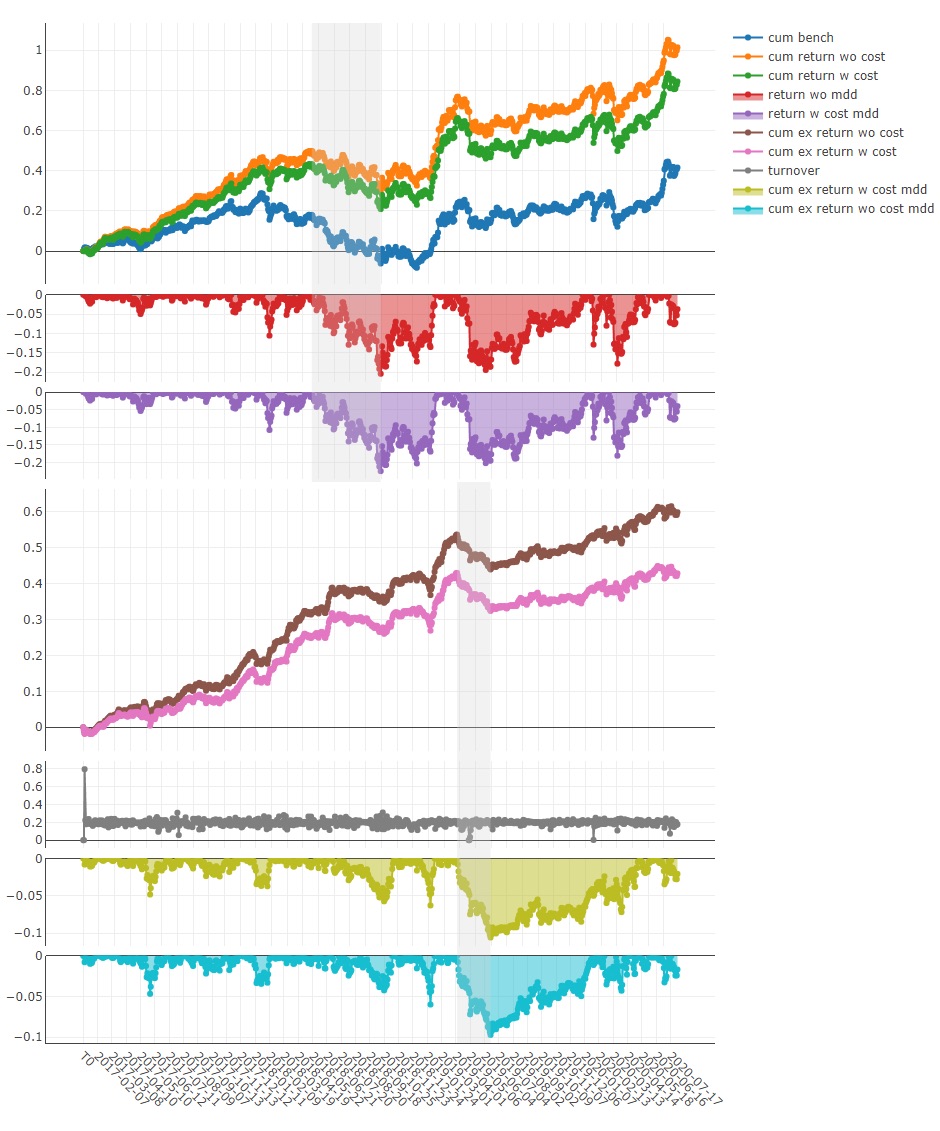
Candidate code, configuration, environment identity, जहां relevant हो seed, data manifest और recorded outputs साथ रखें। Headline result के साथ risk, turnover और benchmark context भी inspect करें। Official Qlib figure उन analysis प्रकारों का उदाहरण है जो quantitative workflow दिखा सकता है। यह service example है, इस guide का result नहीं। Chart तभी उपयोगी है जब underlying trades या signals, input assumptions और evaluation period inspect किए जा सकें, unfavorable intervals सहित।
Search process और execution environment नियंत्रित करें
Generated code को disposable, resource-bounded environment दें जिसमें केवल जरूरी datasets और tools हों। Execution से पहले network access, file mounts और secret exposure review करें। Candidate revisions की संख्या सीमित करें और rejected experiments सुरक्षित रखें। Agent held-out score को बार-बार code सुधारने में इस्तेमाल करे तो वह score development feedback बन गया है। सचमुच untouched evaluation window या दूसरा predeclared evaluation design रखें। Candidates की उपयुक्त baseline से तुलना करें और हर selection decision दर्ज करें, केवल final implementation नहीं।
Model work और computation का बजट अलग रखें
Hypothesis generation, code revisions, embeddings और model retries को request ledger में track करें। Training, simulation, storage और data access को अलग resource ledger में experiment ID से जोड़ें। Local cache repeated work घटा सकता है, लेकिन code और data identity पर keyed होना चाहिए; वरना वह किसी दूसरे candidate का result लौटा सकता है। Iteration या compute budget पहुंचने पर रुकें। Agent को favorable result खोजते रहने देने के बजाय best-supported finding और remaining uncertainty का summary दें।
प्रमाण और दायरा
यह walkthrough नीचे लिंक किए गए official RD-Agent, Qlib और FinRL sources पर आधारित है। Configuration pattern और service figure source-backed हैं; इस page के लिए कोई RD-Agent loop, Qlib training run, FinRL policy या financial return execute या measure नहीं किया गया। Version-specific model configuration के लिए linked RD-Agent guide इस्तेमाल करें और अपना experiment चलाते समय अलग execution record रखें।
अक्सर पूछे जाने वाले प्रश्न
क्या Qlib को LLM API key चाहिए?
उसके core quantitative workflow को नहीं। Attached research agent को chat या embedding credentials चाहिए हो सकते हैं, जबकि configured numerical work Qlib करता है।
Factor workflow की तुलना में FinRL कब बेहतर fit है?
जब research question defined environment में sequential policy learning से जुड़ा हो। Environment और reward design experiment के central parts बन जाते हैं।
क्या agent test period चुन सकता है?
Reviewer को development से पहले evaluation boundaries approve करनी चाहिए। Results देखने के बाद agent को favorable periods चुनने देना experiment को कमजोर करता है।
Generated factor को reproducible क्या बनाता है?
Preserved code, data version, calendar और adjustment rules, dependency versions, preprocessing state और complete evaluation configuration।
Generated code fail होने पर क्या करूं?
Code और structured failure evidence रखें, नए experiment version में सबसे छोटे affected stage को ठीक करें और original attempt को search history में सुरक्षित रखें।