AI สำหรับคอนเทนต์ E-commerce
Updated 2026-09-05
เริ่มจาก store task ที่รีวิวได้: คำอธิบายชัดขึ้น terminology สม่ำเสมอ หรือ catalog ที่แปลแล้ว สร้างรอบ product facts และ import path ที่ควบคุมได้
เลือกปัญหาคอนเทนต์ที่มีขอบเขต
โปรเจกต์แรกที่ดีมี input ที่รู้จัก reviewer ที่ระบุชื่อ และ destination field การเขียนคำอธิบายใหม่จาก specification ที่อนุมัติเข้ารูปแบบนี้ การขอให้เอเจนต์ปรับปรุงทั้งร้านไม่เข้ารูปแบบ เพราะรวมคอนเทนต์ ราคา inventory ข้อมูลลูกค้า และ publishing permissions ก่อนรู้ว่าส่วนใดต้องช่วย
เลือก product family ที่มี specification เข้าใจได้และมี editor ที่รู้ category เก็บ copy เดิมเป็น baseline กำหนดว่า candidate แบบใด publish ได้ รวมความครบถ้วนของข้อเท็จจริงและ tone ก่อนสร้างทางเลือก Assign batch แรกให้ editor เพื่อให้ไปถึงการตัดสินใจ approve จริง
เปรียบเทียบ task จากภาระ review
ปริมาณ content อย่างเดียวเป็นเกณฑ์เลือกที่ไม่ดี ประโยค warranty สั้นๆ อาจต้องใช้ความเชี่ยวชาญมากกว่า feature description ยาว แยก factual transformation จาก creative adaptation และถือ commitment ที่ลูกค้าเห็นเป็น approval-bound fields
ใช้การเปรียบเทียบด้านล่างมอบหมาย reviewer ที่ถูกต้องก่อนเลือก tool เลือก task ที่ทีมประเมิน acceptance criteria ได้จริง แล้วจับคู่ปริมาณกับ review capacity ที่มี batch เล็กที่ accepted เป็นจุดเริ่มขยายที่ดีกว่า draft queue ที่ไม่มีคนดู
| Task | Input ที่มีประโยชน์ | เงื่อนไข release |
|---|---|---|
| Product descriptions ของสินค้า | Approved specifications และ copy เดิม | Fact และ category-editor review |
| Catalog translation | Source revision และ locale glossary | Field checks และ bilingual approval |
| Campaign adaptation | Approved message และ offer terms | Market-editor approval ของตลาด |
| Support article drafts สำหรับทีม | Product และ service policies ปัจจุบัน | Policy-owner approval ของ policy |
สร้างขอบเขตข้อเท็จจริงของสินค้า
เก็บ SKU, variant relationships, prices, currency, quantities และ measurement units ไว้นอก editable output ของโมเดล โมเดลอ้างข้อเท็จจริงได้ แต่ import assembler ควร copy จาก authoritative source งานภาษาไม่ควรกลายเป็นงานเปลี่ยนราคา หรือแปลงหน่วยโดยเงียบๆ
ทำเครื่องหมาย input แต่ละฟิลด์เป็น copy-only, translatable หรือ review-required ใส่ material, dimensions, compatibility และหลักฐาน claim เมื่อเกี่ยวข้อง ข้อมูลที่ขาดควรสร้าง review issue ไม่ใช่การเติมที่ดูน่าเชื่อ ถือ supplier prose รวมถึง instructions ที่ฝังอยู่เป็น source data มันต้องไม่เพิ่ม authority ให้ workflow
{
  "copyOnly": ["sku", "variant_id", "price_minor", "currency", "unit"],
  "translate": ["title", "description", "care_text"],
  "reviewRequired": ["claims", "warnings", "warranty"],
  "onMissingFact": "hold_for_review"
}
จับคู่ integration กับ store
official sources กำหนด boundary ต่างกัน: AI Engine มีเอกสาร custom OpenAI-compatible provider, Immersive Translate มี custom address และ Shopify มี merchant-content translation APIs สิ่งเหล่านี้เป็นความสามารถแยก ไม่ใช่ store connectors ที่แทนกันได้
สำหรับ WordPress ให้ตรวจ drafting workspace ก่อนเพิ่ม publishing access สำหรับ Shopify ให้เลือกระหว่าง translation process ที่ merchant จัดการกับ application ที่ implement แยก ใช้ browser translation เพื่อตรวจ และใช้ translation หรือ import path ของ store เองเพื่อส่งมอบ setup guides ที่ลิงก์ระบุ settings ตามเอกสารและ integration checks ที่ต้องทำ
ใช้ glossary ก่อนเพิ่มภาษา
glossary ควรอธิบายความหมาย ไม่ใช่แค่จับคู่คำ บันทึก product concept, approved term, forbidden alternatives, ว่าชื่อแบรนด์คงเดิมหรือไม่ และใครอนุมัติกฎ เพิ่ม context ให้คำที่มีความหมายต่างกันในแต่ละ category
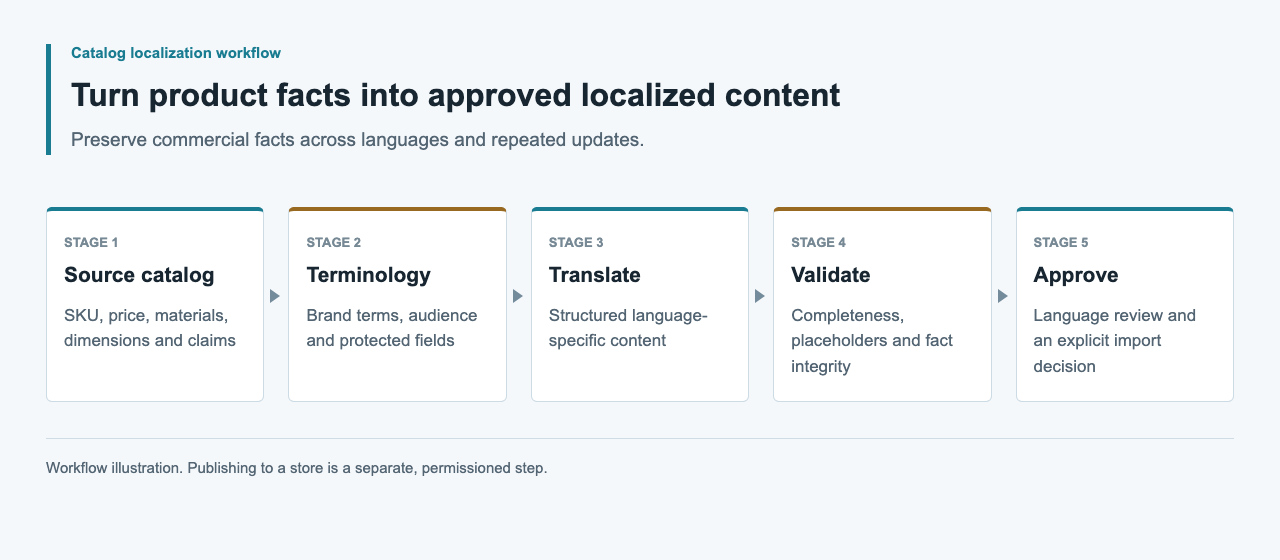
แปลแต่ละ locale จาก source revision เดียวกัน การต่อ machine translation จากภาษาหนึ่งไปอีกภาษาทำให้หาจุดที่ specification เปลี่ยนยาก แยก market-specific presentation rules จาก language rules การแปล label ไม่อนุญาต shipping promise, payment method หรือ product certification ใหม่ แก้คำถามเหล่านั้นกับผู้รับผิดชอบตลาด
ทำให้ approval เป็น operation แยก
บันทึก generated copy เป็น candidate แสดง source, candidate, protected facts และ validation issues ให้ reviewer พร้อมกัน บันทึก approved revision ไม่ใช่โน้ตลอยๆ ว่าเช็กสินค้าแล้ว มิฉะนั้น generation รุ่นหลังอาจรับ approval ที่ตั้งใจให้ text รุ่นเก่า
สร้าง import file จาก candidate ที่ approved และ source revision ยังตรงกันเท่านั้น เริ่มจาก disposable หรือ staging store และเทียบ stored fields กับ patch ที่ตั้งใจ การ upload สำเร็จเป็นเพียง checkpoint เดียว product page, variants และ language selection ต้องแสดง content ที่ approved ถูกต้องก่อนพิจารณา live release
ประเมิน cost ต่อ deliverable ที่ accepted
เก็บ request usage, retries, editor time และ integration work เป็น ledger entries แยกกัน generation ที่ราคาถูกอาจแพงเมื่อแก้มาก ในทางกลับกัน extra review calls เหมาะสมก็ต่อเมื่อมันลดปัญหาที่สังเกตได้ใน sample เดียวกัน
ใช้ข้อมูล catalog ปัจจุบันเมื่อเลือกโมเดลและบันทึก ID ที่แน่นอนของแต่ละ stage เปรียบเทียบ candidate จาก source material เดียวกันและนับ accepted product-locale revisions เก็บ failed attempts ใน ledger เพื่อให้ cost ต่อ deliverable รวมงานที่ต้องทำจน approve
กำหนด deliverable ถัดไป
deliverable แรกควรเป็น review package: source snapshot, glossary revision, candidate text, field-level checks และ import proposal ใส่ rejected rows และ unresolved facts เพื่อให้ merchant อนุมัติสิ่งที่เป็นรูปธรรมโดยไม่ให้เอเจนต์เข้าถึง store กว้างเกินไป
เมื่อ package ผ่าน review ให้ทดสอบ destination adapter และบันทึก import report กับ read-back comparison ขยาย catalog หลังอธิบาย failure และ resume ได้โดยไม่ duplicate updates linked workflow, quality-check และ platform guides อธิบายการตัดสินใจเหล่านี้เพิ่มเติม
คำถามที่พบบ่อย
ทีมเล็กควรเริ่มจาก ecommerce AI task ใด?
เลือก draft task ที่มีขอบเขตและมี reviewer เช่น descriptions ของ product family ที่คุ้นเคย เก็บ copy และ specifications ปัจจุบันเพื่อให้ acceptance อิง comparison ไม่ใช่ความชอบข้อความที่ลื่นไหล
AI เปลี่ยน SKU หรือราคาในระหว่างแปลได้หรือไม่?
workflow นี้ป้องกันโดยตัด fields เหล่านั้นออกจาก generated patches copy ค่าจาก authoritative source ไปยัง final import และตรวจซ้ำหลังจัดเก็บ
custom endpoint เชื่อมกับ store ให้โดยอัตโนมัติหรือไม่?
ไม่ Model requests, store authentication, field mapping และ publication เป็น integration steps แยกกัน endpoint setting ตามเอกสารยืนยันได้เฉพาะความสามารถด้าน configuration
สินค้าทุกชิ้นควรใช้ frontier model หรือไม่?
ตัดสินจาก controlled sample ที่ใช้ source, acceptance rules และ reviewers เดียวกัน บันทึก retries และ revision work ก่อนจัดสรรโมเดลให้ task
ควรประเมิน localized descriptions อย่างไร?
ตรวจ factual accuracy, language quality และการส่งมอบสำเร็จก่อน จากนั้นประเมิน commercial performance ด้วย storefront data จริง วันที่จริง และบริบท audience จริง